The buildings where the students are staying and
where we have the classroom are a 40 minute walk out of town. The
only problem with this is that there is no mains electricity in the
classroom or student accommodation. They have solar powered lighting
which is great but not enough to charge the computers which we
brought for them. As a result we have to carry the computers up the
hill every morning and down the hill every evening so that we can
charge them. But some times we don't have electricity in town either.
When we arrive back in town in the evenings it is
rush hour and the wide street is full of people; lined with food
sellers, their wares polished and neatly arranged on a piece of cloth
on the ground and thronged with customers going about the serious
business of buying food.
Music blares from the shops along the street behind
the food sellers and everyone is talking, shouting, hailing friends.
We buy our breakfast as we go by on our way home – avacados,
tomatoes and onions; Yum. We arrive into the rest house exhausted and
the electricity goes off accompanied by a roar of disappointment
behind us from the town.
There is something very peaceful about sitting in the
pitch black in the restaurant where we have our dinner (€1.25 for
nsima, beans and goat, 50 cent for omelette) knowing there are people
at every table, soft voices in the dark, but seeing no-one. Later
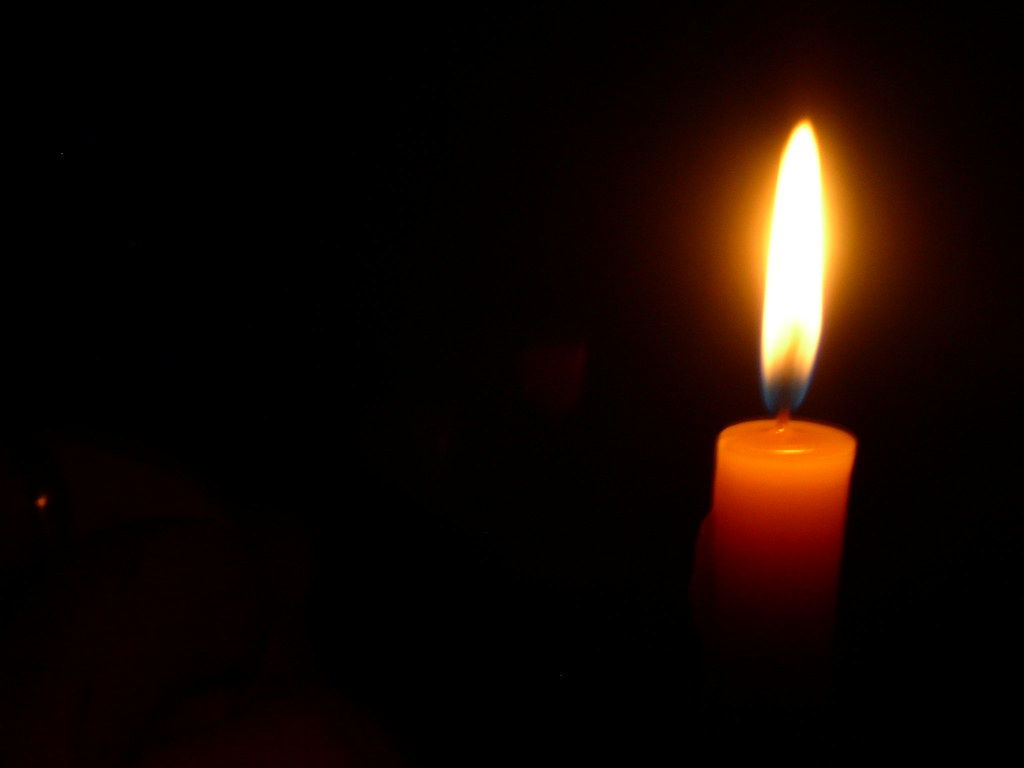
they bring a candle which helps us see our food but doesn't really
dispel the darkness.
We don't see the main street from where we are
enclosed in a courtyard but we can always hear it and the happy hoots
and whistles that go up when the electricity goes on again remind us
that we are surrounded by a thousand people. No noise of traffic,
which is minimal, but always voices.
After a night of no electricity the bonus is the huge
bucket of scalding, wood smoke smelling water delivered to your door
in the morning.
This trip is not so exhaustingly intense for us
because we don't have to see a hundred patients as well as teaching.
Four of our students are from this town so there are four competent
prescribers here now and we know that people are still going to be
cared for when we leave. Instead we see the difficult cases only;
four people with epilepsy on Tuesday, five homoeopath's children on
Wednesday (very difficult to prescribe for your own child!). This
leaves us free to concentrate on teaching and the teaching has been
amazing. It is a small group, they are here to learn and you can
literally see the information going in like water dropping in a well.
There is serious discussion and questions that push the edge of the
pool of knowledge wider and wider as the week goes on. Jane and I
teach together and if one of us misses something the other picks it
up, this is a very easy sharing of knowledge. The students are
delighted, it is two years since we have been here and the questions
have been building up. I am glad we came.
Friday, 6 May 2016

Thursday, 5 May 2016
It is 3.30 on Tuesday afternoon and I have hit bliss.
It is exactly a week since we set out from home, the end of our
second day of teaching and I am sitting in one of the small rooms
with Fulgensio, who is translating for me, our 24 year old patient,
who suffers from epilepsy, and her mother. I have been hurrying,
hurrying, we have crammed so much into two days of teaching and now
we are seeing patients who have been waiting since morning. Of course
I woke at 4am to work on yesterdays cases and at this stage I am
seeing through a haze. I give up, what can I do? I have asked a
question that seems to take a lot of translating and while I wait for
an answer I zone out and watch the conversation. We are in a new
building with unpainted walls which give a perfect grey saturation to
host the bright sun blazing at the window and the beautiful black
faces and vibrantly coloured clothes that fill the room. I am happy,
and, in my moment of zoning out I understand what remedy to give the
girl and I think she will do well – always worth giving up!
I am happy with our students too; SUCH hard workers, they have spent the day today captivated by their books. They cannot get enough, reading, discussing, listening learning. The stakes are high for them. All of them are helping a lot of people back home and they are keen to fill the holes in their knowledge and for us it is a great experience to teach such motivated people.
Or whole camp is happy! We have cooks and carpenters (the extra chairs), children (a four year old boy who has travelled from the South of Malawi with his mother who is one of our students) and the patients who wait and chat and wait. In the middle of the day everyone gets fed – the cooks, the carpenters, the students, the teachers, the organisers, the film crew (Davy), the patients waiting patiently, the patients mothers and the boy. Today we had nsima and goat. This may be an expensive way of running a course but every student we teach will help a hundred people and when a thousand people have been helped we won't regret the cost of those extra lunches. Which are very delicious by the way!
Such a pleasure to meet Pastor Fulgensio Tembo today and hear how
homoeopathy is thriving in Mzimba. He tells us how he has been using
the remedies since we were last here and learning more and more about
them as he sees them working in different patients. I find it very
encouraging to hear that he is continuing to teach himself and lovely
to spend an hour in the company of this sound man after our whirlwind
arrival yesterday. We sit in the bus station, drink a soda and chat,
my spirits rise and I am thrilled with the realisation that Jane and
I have helped him along the way.
Pastor Lameck Ngulube is a different personality, he was HHA's first contact in Malawi, his enthusiasm brought him to Tanzania to study the introductory course with Jeremy, and Davy and I first met him in Moshi on one of his return visits. He holds this whole project together and wheels and deals and organises. It could not be done without him. He is up to his ears over the next few days trying to get everything ready for the arrival of the students, he has organised accommodation and food and a room for us to teach in. This afternoon he is sourcing chairs so we may not have to hire them.
So many things have changed in the town – the market, inspiration for all my prints, burnt down and has been rebuilt – but our room in the Gapa Rest House is exactly the same and there are scary moments when I feel we have always been here. But part of my soul hangs onto the knowledge of a cool, damp, fresh Island with no government and this is a short trip after all.
Friday, 29 April 2016
This could be my last brush with internet so I better write
something. Our first day was a little overwhelming – I had
forgotten exactly what the “fresh” in fresh air means. At home if
I can't sleep I have only to open the window and cool, liquid clean
pours in with a secret tang of the deep sky. It is like water to
thirst and I am asleep again in moments. Here in Lilongwe the air is
warm and thick, smells of spice and holds the possibility of mosquitoes. I don't sleep much the first night though beyond
exhaustion from the trip from Ireland.
On our second day Pastor Lameck arrives; Malawian hospitality being such that he must drive the three hours from Mzimba to escort us back there tomorrow, he has been given the use of a car by a grateful patient and we have only to buy fuel. He arrives in time to drive us out to the airport to meet Jane arriving from Tanzania. My suggestion that I wait (sleeping) in the hotel while he meets Jane does not compute – he can not believe of me that I would be so rude – so we all pile into the car and lumber back out to the airport which I am glad of, of course, once I have been made to do it.
In the airport we sit in the waving bay on the second floor terrace and excitedly wait to wave at Jane, who doesn't see us, but never mind, we now have the fifty minute ride back into town to catch up and reminisce on our last trip to Malawi which took 2 days, four buses, a car, three motor bikes and four bicycles. We volunteer Davy to sit on the hard part of the seat and we drive in the dark planning our teaching strategy in broad strokes; we will spend the first day interviewing each of our twelve students to find out exactly what their needs are, how they are getting on with homoeopathy back home and what we can give them that is going to help them the most. We will be teaching use of the repertory and distributing the repertories we have brought with us but there may be other questions that need answering.
End of the second day. Night's sleep. Don't feel quite so cranky this morning! Mzimba today.
Tuesday, 26 April 2016
Packing again. It seems very boring to write a post about packing
yet packing has been all consuming in the past few days. So different
from the time we left for Tanzania 3 years ago when we were really
travelling into our imaginations, not having any reference for where
we were going, yet still pretty scary.
There is one thing I will be doing differently – I won't be bringing presents for the small children that we meet. Nothing I bought last time was relevant; the bouncy balls didn't bounce in the dust or the mud, the stickers were too precious and strange to stick, so many children left the consultation worried by the little gift they were clutching. This time I will accept that gift giving is not my skill and I will stick to prescribing and teaching. BUT if I can find bubbles this morning before I leave I will bring those. On our last trip any time bubbles appeared they were met with such hilarious delight. And they are of the moment, there - and then magically gone, petrol rainbows in the sunshine, causing a dancing swirl of chasing, thrilled and laughing children and then run out. Totally useless – only for joy.
What we are packing this time is more heavy duty; computers filled with libraries and homoeopathic remedies filled with potential benefits for the people who receive them. Both those things packing a big punch for the relatively small space they are taking in our bags and the small amount of money it cost to get them together. What a relief to pack up those computers after a month of tripping over them spread all over the house plugged into every available socket having their brains cleaned out and rearranged. Good to go now.
A big THANK YOU to everybody who has made this trip possible. We have received such amazing support. Lots of people have stepped in and done one impossible thing; lent us the lovely room for the fund raising party, sourced computer batteries, found the courier to deliver the computer batteries, given us computers, offered to pick up remedy bottles, donated great prizes for our raffle, given us money, given us computer software, smiled at us!! Instead of being impossible it's been really great. Thank you all.
Tuesday, 15 March 2016
The group of students Jane and I taught in Malawi in 2013 and 2014
are extraordinary individuals. They come from all over Malawi and
from Zimbabwe and they are now valiantly using homoeopathic remedies
to help people in their communities. They have taken everything they
have learned and they have run with it using every word of every book
on homoeopathy that they own.
They really remind me of starting out in Ireland 35 years ago. I didn't even know what homoeopathy was I only knew that a bottle of belladonna 30 tablets bought in my local health food shop had completely healed my baby's bursting earache.
That bottle of belladonna sent me on an Odyssey to find books on homoeopathy, writing to book shops and publishers (no internet then). The first book I found, ordered for me by a tiny book shop in Dun Laoghaire, was Samuel Hahnamann's Organon of Medicine. I read it from cover to cover like it was a thriller. Well it is a thriller! Thrilling to find a medicine so effective.
This April 26th I am heading back to Malawi to teach the same group of students again. Davy is coming with me, no longer a skinny 15 year old, and he will teach computer skills. Jane is Travelling from Tanzania and will meet us there. We are bringing lap top computers, smart phones and homoeopathic software – all donated – which will bring our students to another level.
Also on this visit I plan to spend more time collecting the students' individual stories. Having a radio programme has filled me with a love of story and, of course, everyone has one!
Saturday, 28 November 2015
I lived without mains electricity in West Cork for a few years in the early eighties. We eventually got a diesel generator, a huge Lister engine that thumped away in the shed for a few hours every night giving us a certain amount of light and running the washing machine. We had it rigged so that turning out the last light at night would automatically switch the generator off and we would lie in the dark listening to it winding itself down to silence. We also had paraffin lamps and candles and I don't remember missing the mains electricity though I'm sure I did. Our house was high on the hill and during the many power cuts the rest of the parish could see our light shining on. We were a feature of the night landscape where every light meant a person or family alone in their stretch of darkness. We got the mains electricity at the end of 1987 and relaxed into an easier life.
In May 2015 I found myself without electricity again. But this time I was living on the main street in Dun Laoghaire where everyone has electricity, everything is electric and I was taking electricity very much for granted. The cut off was like a slap in the face and I sat in my newly silent house sipping a hot drink made from the last boil of the electric kettle and felt stunned.
When action returned I tracked down my landlord who immediately emailed the relevant piece of information to Electric Ireland but when I phoned them they informed me that they could not open my landlord's email for two days. They took my phone number and said they would phone me back.
As it turned out by the end of the two days of enforced waiting I had put the electricity free system in place that was going to last me four months. Which was lucky because they never did phone me back.
The thing that happened to me with the electricity cut off was that I discovered my town. No washing machine? Never mind there is a friendly and efficient laundry two doors down. No broadband? Never mind there is a cafe two doors in the other direction equally friendly and glad to see me, thank you Two Beans. Though I later discovered that the wifi from the pub across the road reaches conveniently to my desk which is inside my front window - thank you Gilbert and Wright! But mostly the lack of electricity budged me away from my all electric desk where I had been firmly lodged and walked me around my town.
It became my habit to do the researching part of my case work in the library every day. This gave me somewhere quiet and pleasant to work and charged my computer which meant I had another three hours of computer time at home. I charged my phone in the car. I ran a paper free office and emailed receipts because of course I had no printer. I found a printer – I mean a man, not a small electric humming thing that gobbles expensive ink – three minutes walk away who did an excellent job of printing my leaflets.
Life settled into a new rhythm. I have a gas cooker so I wasn't stuck for cooking though I burnt out two saucepans before I bought myself a kettle with a whistle. Apart from that whistle a house without electricity is very quiet; no radio, no podcasts, no you tube, no Netflix, no washing machine, no fridge. All those plugged in things hum and groan. I did miss the fridge but I soon got into the habit of buying only what we needed each day. 2 big supermarkets downtown - 2 minutes walk away.
I started to love the silence and the candle light. I washed by candle light in the basin with water ladled from a pot heated on the gas, the softness and slowness of it a pleasure. I would get up in the middle of the night for a glass of water and the 'flup' of the lit match and the glow of the candle would hardly disturb my sleepiness compared to the unrelenting crack of a light switch and the startling bright of the electric light. Reading in bed by torch light was another unexpected pleasure because you don't have to lie with your book angled to the light, rather your torch can follow your every turn. But night time light was another thing that the town thoughtfully provided – we had only to open our window blinds for the room to be filled with street light.
Subscribe to:
Posts (Atom)